
A product description does more than tell people what an item is. It helps potential customers understand why they need it, what makes it valuable, and why they should buy it from you.
Whether you sell skincare products, clothing, books, electronics, food, or alcoholic beverages, a well-written product description can turn casual browsers into paying customers. In this guide, you will learn how to write product descriptions that are clear, persuasive, search-engine friendly, and focused on your customers’ needs.
Understand Your Target Customer
The first step in writing a strong product description is understanding who you are writing for.
Before describing the product, consider:
- Who is most likely to buy it?
- What problem does the product solve?
- What features matter most to the customer?
- What questions might prevent the customer from buying?
- What tone will appeal to the target audience?
For example, a description for a luxury whisky should sound different from one for an affordable everyday spirit. The first may focus on craftsmanship, age, flavour, and prestige, while the second may highlight value, versatility, and suitability for social occasions.
When you understand your audience, your writing becomes more relevant and persuasive.
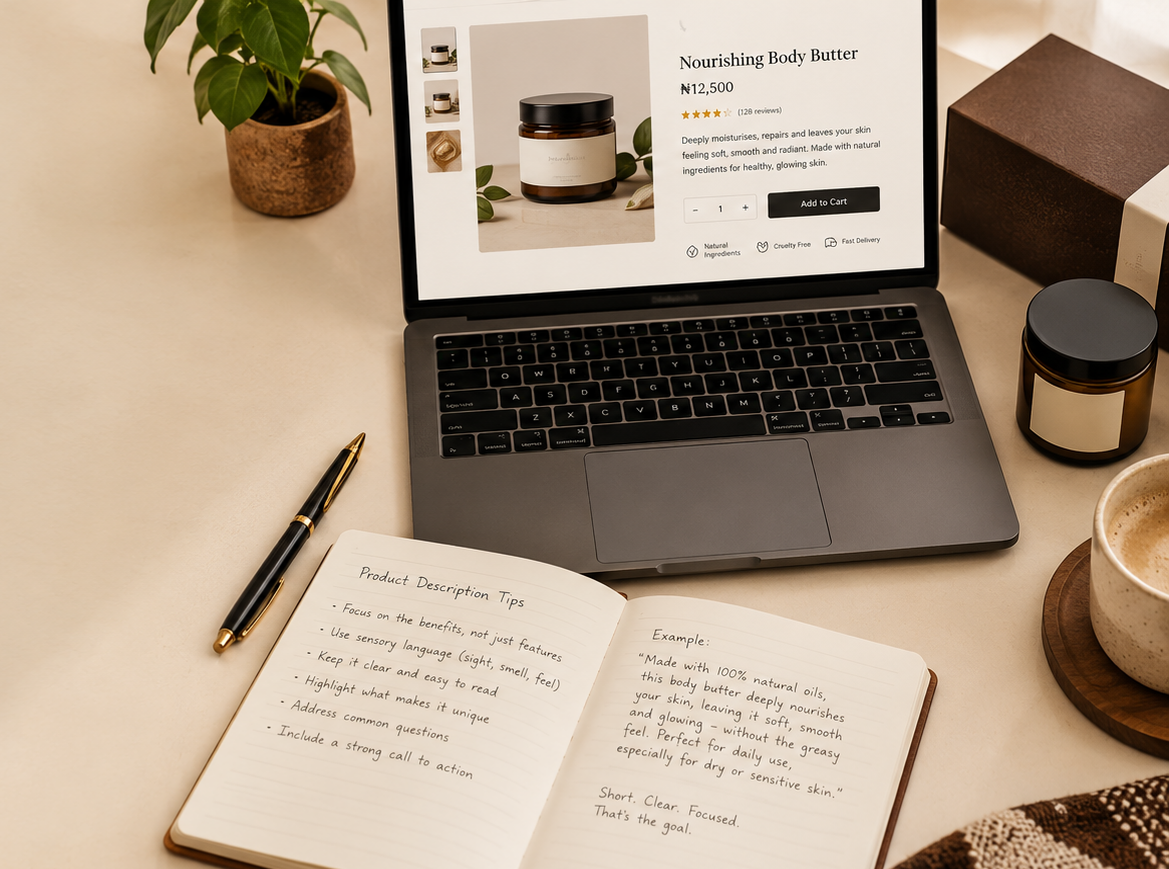
Focus on Benefits, Not Just Features
Features describe what a product has. Benefits explain what the customer gains from using it.
For example:
- Feature: Made with premium leather.
- Benefit: Offers a durable and polished finish for everyday use.
- Feature: Aged for 12 years.
- Benefit: Delivers a smoother, more complex drinking experience.
- Feature: Lightweight design.
- Benefit: Makes the product easier to carry throughout the day.
A good product description can include features, but it should always connect those features to practical or emotional benefits. Customers want to know how the product will improve their lives, solve a problem, or make an experience more enjoyable.
Write a Clear Product Title
Your product title should tell customers exactly what they are viewing.
A useful title may include:
- The product name.
- The brand name.
- The product type.
- The size, quantity, or variant.
- A key distinguishing feature.
For example, instead of writing “Premium Choice,” use a clearer title such as “Hennessy VS Cognac 700ml.”
Clear product titles also help search engines understand the page. Avoid stuffing titles with unnecessary keywords or using vague phrases that do not explain what the product is.
Use Sensory Language
Sensory language helps customers imagine the product before they buy it. This is especially useful for food, drinks, fragrances, fashion, beauty products, and home décor.
For a beverage, you might describe:
- Colour and appearance.
- Aroma or nose.
- Taste and texture.
- Finish.
- Best serving method.
- Suitable occasions.
For example:
This smooth blended whisky opens with gentle notes of vanilla and toasted oak, followed by a warm, slightly spicy finish. Enjoy it neat, over ice, or as the base of a classic cocktail.
The goal is not to exaggerate the product. Instead, use specific and believable language that gives customers a clearer sense of what to expect.
Make the Description Easy to Scan
Most online shoppers do not read every word on a product page. They scan for important information before deciding whether to continue.
Make your description easier to read by using:
- Short paragraphs.
- Descriptive subheadings.
- Bullet points.
- Bold text for important details.
- Clear information about size, quantity, colour, or specifications.
A simple structure could include:
Product overview
Give a concise explanation of what the product is.
Key features
List the most important product details.
Benefits
Explain why those features matter.
How to use it
Provide instructions, serving suggestions, or styling ideas.
Delivery or purchase information
Tell customers what they need to know before ordering.
Include Relevant SEO Keywords
Search engine optimisation can help more shoppers discover your product page. Use the main keyword naturally in places such as:
- The product title.
- The first paragraph.
- At least one subheading.
- The URL slug.
- The meta description.
- The image alt text.
For example, if your focus keyphrase is “premium gin in Nigeria,” you could write:
Looking for premium gin in Nigeria? This handcrafted London Dry Gin combines juniper, citrus peel, and aromatic botanicals for a refreshing drinking experience.
Avoid repeating the same keyword unnaturally. Search engines and customers both respond better to useful, natural writing than forced keyword placement.
Answer Customers’ Common Questions
A strong product description should reduce uncertainty. Include information that helps customers make a confident decision.
Depending on the product, answer questions such as:
- What size or quantity is available?
- What materials or ingredients are used?
- How should the product be used?
- Is it suitable for a particular occasion?
- How long does delivery take?
- Are there different flavours, colours, or variants?
- What makes this product different from similar options?
When important details are missing, customers may leave the page to search elsewhere. Clear descriptions help keep their attention and make the buying process easier.
Build Trust Without Overpromising
Persuasive writing should be confident, but it must remain accurate. Avoid making claims that you cannot support.
Instead of writing:
This is the best product in the world.
Use a more credible statement:
This is a versatile choice for customers who want a smooth spirit for sipping or mixing into cocktails.
You can strengthen trust by including:
- Accurate specifications.
- Verified product details.
- Customer reviews.
- Awards or certifications, where applicable.
- Clear return and delivery information.
- High-quality product images.
Honest descriptions protect your brand reputation and create better customer expectations.
End With a Clear Call to Action
After explaining the product, tell the reader what to do next.
Examples include:
- Add this bottle to your collection today.
- Order now for delivery in Abuja and beyond.
- Explore the full range of premium spirits.
- Choose your preferred size and place your order.
- Buy now and enjoy a smoother way to celebrate.
A call to action should be direct and relevant to the customer’s stage in the buying journey. Avoid using several competing calls to action on the same product page.
Product Description Example
Product: Premium Blended Whisky 750ml
Experience a smooth and balanced blended whisky created for relaxed evenings, celebrations, and memorable gatherings. This 750ml bottle combines gentle notes of caramel, vanilla, and toasted oak with a warm finish that makes it enjoyable neat, over ice, or in classic cocktails.
Its balanced flavour makes it a versatile choice for both whisky enthusiasts and beginners. Serve it at home, share it with guests, or present it as a thoughtful gift for a special occasion.
Key details:
- Product type: Blended whisky.
- Bottle size: 750ml.
- Flavour profile: Smooth, lightly sweet, and warmly spiced.
- Best served: Neat, over ice, or in cocktails.
- Ideal for: Gifting, celebrations, and casual enjoyment.
Order your bottle today and make your next occasion more memorable.
Common Mistakes to Avoid
Avoid these mistakes when writing product descriptions:
- Copying the manufacturer’s description without adapting it.
- Listing features without explaining their benefits.
- Using vague words such as “amazing” or “high quality” without evidence.
- Writing one large block of text.
- Ignoring customer questions.
- Using keywords unnaturally.
- Making unsupported claims.
- Forgetting to proofread.
- Leaving out product size, quantity, or important specifications.
- Using weak or generic calls to action.
Your product description should be informative, persuasive, and easy to understand at the same time.
Frequently Asked Questions
What is a product description?
A product description is written content that explains what a product is, what it does, its main features, and why customers should consider buying it.
How long should a product description be?
There is no fixed word count. Simple products may need only a short paragraph and a few bullet points, while technical or premium products may require more detailed information.
Should product descriptions include keywords?
Yes. Include relevant keywords naturally in the title, description, headings, URL, meta description, and image alt text. Avoid excessive repetition.
How can I make a product description more persuasive?
Focus on customer benefits, use specific language, address common concerns, include relevant details, and end with a clear call to action.
Can AI write product descriptions?
AI can help with brainstorming and drafting, but every description should be checked for accuracy, originality, brand voice, and customer relevance before publication.
Final Checklist
Before publishing a product description, confirm that it:
- Clearly identifies the product.
- Speaks to a specific audience.
- Explains benefits as well as features.
- Uses relevant keywords naturally.
- Includes important specifications.
- Is easy to scan on mobile devices.
- Answers likely customer questions.
- Uses accurate and believable claims.
- Contains a strong call to action.
- Has a clear meta title, meta description, and image alt text.
A product description should not merely describe an item. It should help the customer imagine owning it, understand its value, and feel confident enough to take the next step. Use this structure as a guide, then adapt the tone and details to match each brand and product. SEO guidance also recommends clear headings, short paragraphs, natural keyword placement, internal links, and useful information that directly answers search intent.
Need Help Writing Product Descriptions That Sell?
Do your product pages struggle to attract attention or convert visitors into customers? I can help you create clear, persuasive, and SEO-friendly product descriptions that highlight your products, connect with your target audience, and encourage more purchases.
From liquor and beverage descriptions to books, fashion, beauty products, and digital services, I write customer-focused copy that matches your brand voice and business goals.
Ready to improve your product content? Hire me to write your product descriptions.